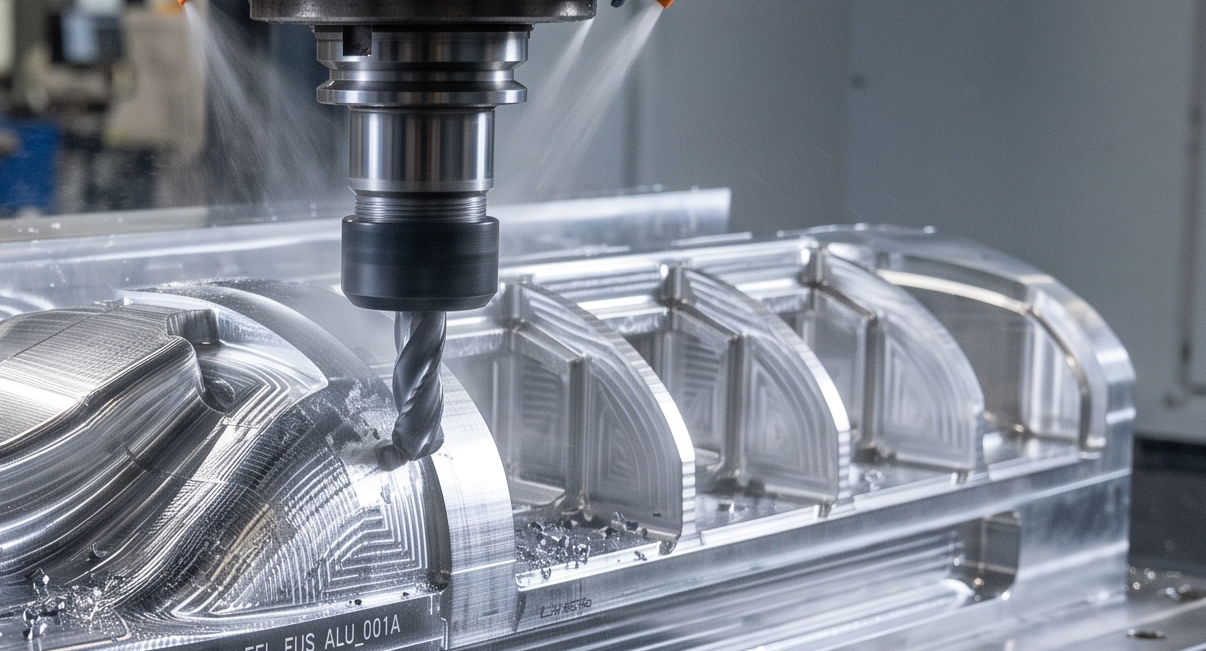
In automotive styling, aerospace engineering, and defense innovation, speed to market hinges on one critical step: physical validation. Whether evaluating aerodynamics on an exterior styling buck, validating cockpit ergonomics, or testing full-scale composite tooling, compromise is not an option. Yet traditional model building often forces leaders to choose between scale, structural integrity, and turnaround time.
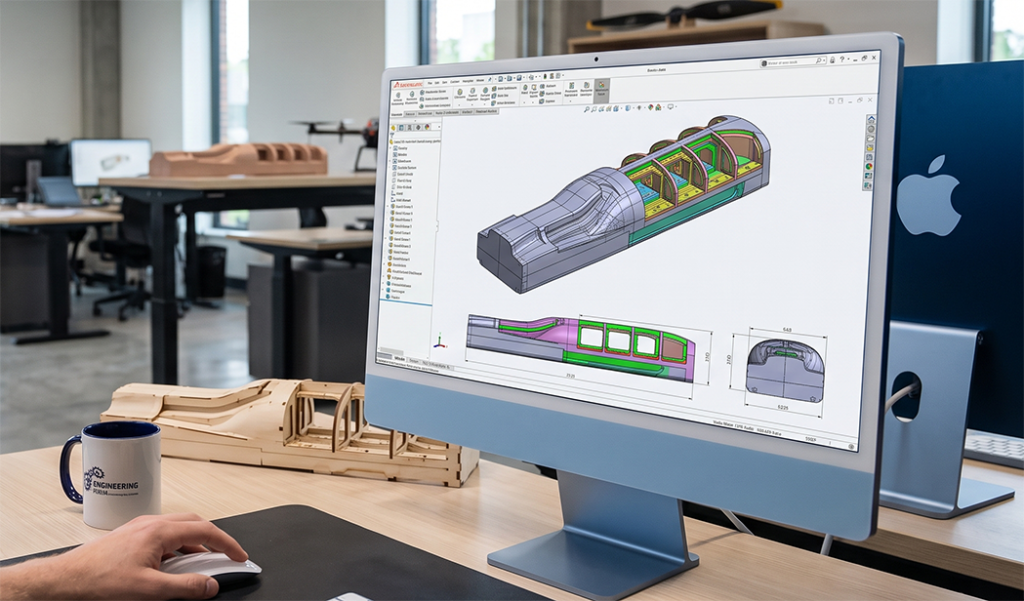 Large-format 5-axis CNC machining removes those compromises entirely. With an envelope reaching 200 x 300 x 700 cm, it is now possible to mill full-scale chassis concepts, aerodynamic sections, and functional prototypes in a single setup.
Why 5-axis capability changes the equation for decision-makers
- Flawless geometric continuity: Conventional 3-axis systems require breaking large models into smaller segments that must later be bonded, aligned, and manually finished. 5-axis continuous milling handles complex undercuts, deep cavities, and flowing aerodynamic surfaces seamlessly. The result is a continuous surface with zero bonding seams or alignment drift.
- Rapid material versatility: A project often evolves across several physical mediums before sign-off. High-capacity 5-axis machines transition smoothly between styling clay for aesthetic exploration, technical styling plastics and polyurethane tooling boards for master patterns, and machinable metals for functional structural verification.
- Accelerated development cycles: Repositioning a multi-meter workpiece introduces human error, requires custom fixtures, and consumes valuable days. Approaching the component from virtually any angle in one continuous run reduces production time by weeks, cutting manual hand-finishing down to a minimum.
- Direct design fidelity: What your design studio renders in digital CAD is translated directly into the physical model. Eliminating multi-part assembly errors ensures wind tunnel tests, executive presentations, and ergonomic trials reflect pure engineering intent.
For leaders guiding next-generation mobility, defense systems, and aerospace platforms, physical models are not just checkpoints—they are decisive tools for executive consensus and competitive edge. Scaling up to 7-meter continuous milling turns ambitious concepts into tangible assets faster, cleaner, and with complete precision.