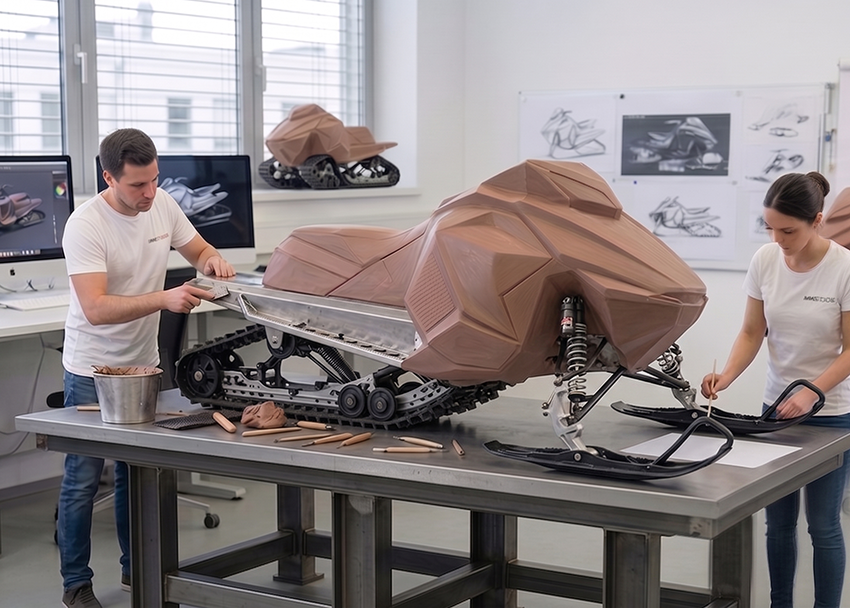
Merging rigorous mechanical engineering with forward-thinking industrial design demands a zero-compromise physical prototyping workflow. Throughout the conceptual development of next-generation high-performance snowscooters, physical scale mockups act as indispensable testbeds where aerodynamics, rider ergonomics, and premium surface finishes align. Establishing this degree of physical accuracy ensures smooth continuity from digital CAD environments to real-world materials, yielding substantial savings in manufacturing budgets and release timelines.
Each exterior curve on a design concept fulfills a two-fold role: channeling snow-laden airflow and defining the vehicle’s visual signature. Striking this balance requires seamless alignment between digital surface modeling, multi-axis CNC carving, carbon fiber integration, and meticulous hand refinement—yielding tangible evaluation opportunities that computer simulations simply cannot replicate.
High-grade surfacing and algorithmic optimization:
Advanced surface modeling and load-path algorithms shed unneeded bulk, refining the structural integrity of the snowscooter frame while sculpting sleek aerodynamic profiles to minimize total machine mass.
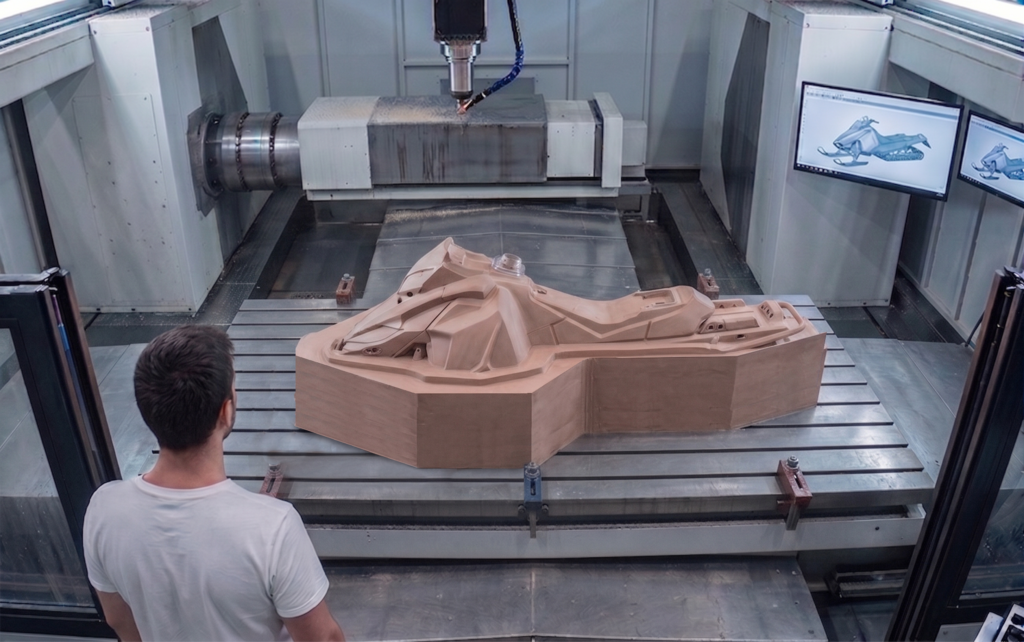
Precision CNC subtractive machining:
Multi-axis milling machinery translates exact digital files directly onto dense foam and clay blocks, preserving tight component fitment and panel alignment to avoid costly tooling revisions.
Tactile clay refinement:
Skilled craftspeople sculpt and adjust specialized modeling clay over underlying frameworks, utilizing focused illumination to perfect front-cowl contours, side panels, and visual highlights on the fly.
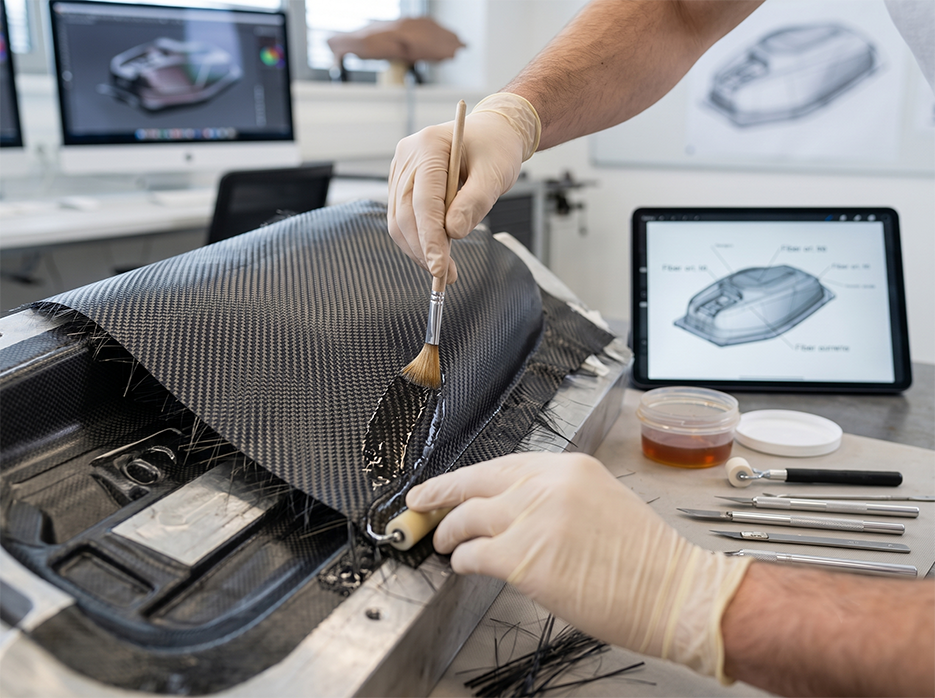
Carbon fiber layup and structural reinforcement:
Strategically laying up vacuum-bagged carbon fiber panels delivers unmatched strength-to-weight ratios, ensuring high torsional rigidity, impact resistance in sub-zero environments, and precise real-world stress testing of load-bearing structural elements.
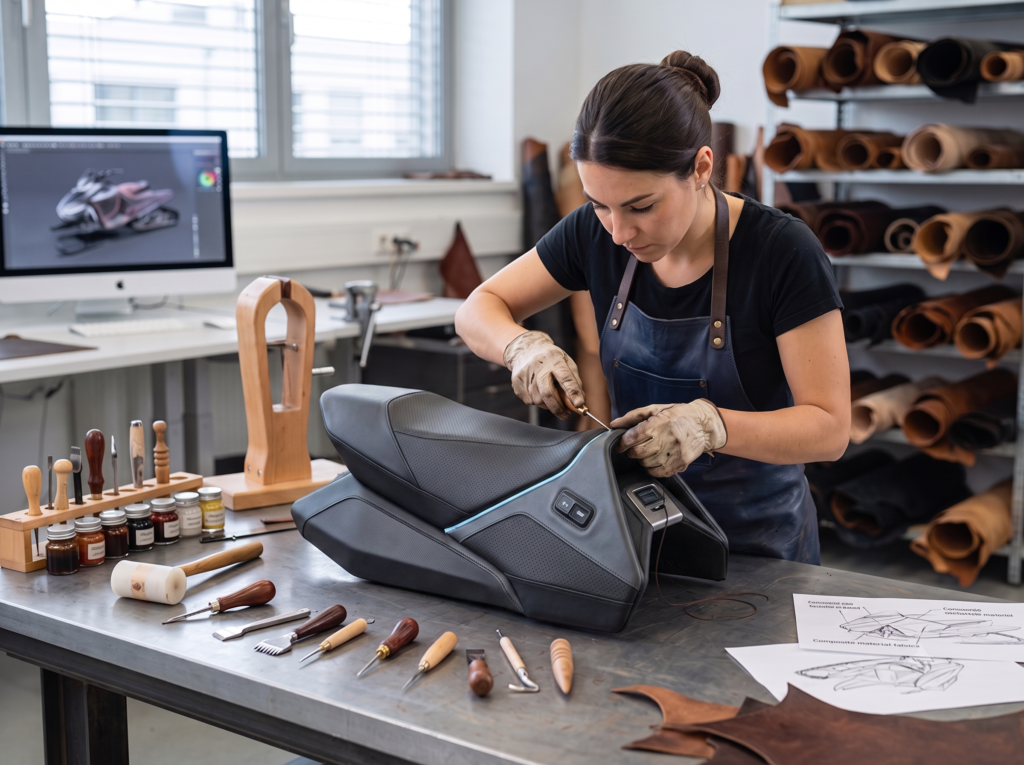
Custom leatherwork and seating design:
Hand-crafted leather upholstery embeds custom rider ergonomics and contact interfaces directly into the chassis layout, enabling real-world evaluation of riding stance, hold, and control access in harsh freezing environments.
Multi-layer painting and finish application:
Premium primers, rich metallic base layers, and durable clear coats are painstakingly sprayed to reveal subtle structural shifts and evaluate light play across every complex curve prior to production sign-off.
Integrated 3D printing:
Additive manufacturing (such as SLA and SLS printing) enables functional elements—like air intake grilles, stability fins, ski attachment hardware, and internal airflow channels—to be test-fitted and verified straight onto the base build, bypassing long lead times for custom tooling.
Crafted for exhibition, proven for manufacturing
Starting with primary support frames and progressing through manual clay shaping to carbon composite integration and final surface coatings, every step of snowscooter prototyping prioritizes absolute fidelity. Design teams retain total control over their aesthetic intent, while engineering teams secure definitive proof of spatial fit, cooling performance, track clearance, and step-by-step assembly long before factory lines begin running.
Crafted for exhibition, proven for manufacturing
Starting with primary support frames and progressing through manual clay shaping to final surface coatings, every step of snowscooter prototyping prioritizes absolute fidelity. Design teams retain total control over their aesthetic intent, while engineering teams secure definitive proof of spatial fit, cooling performance, track clearance, and step-by-step assembly long before factory lines begin running.