The boundary-pushing power of multi-material 3D printing in advanced manufacturing
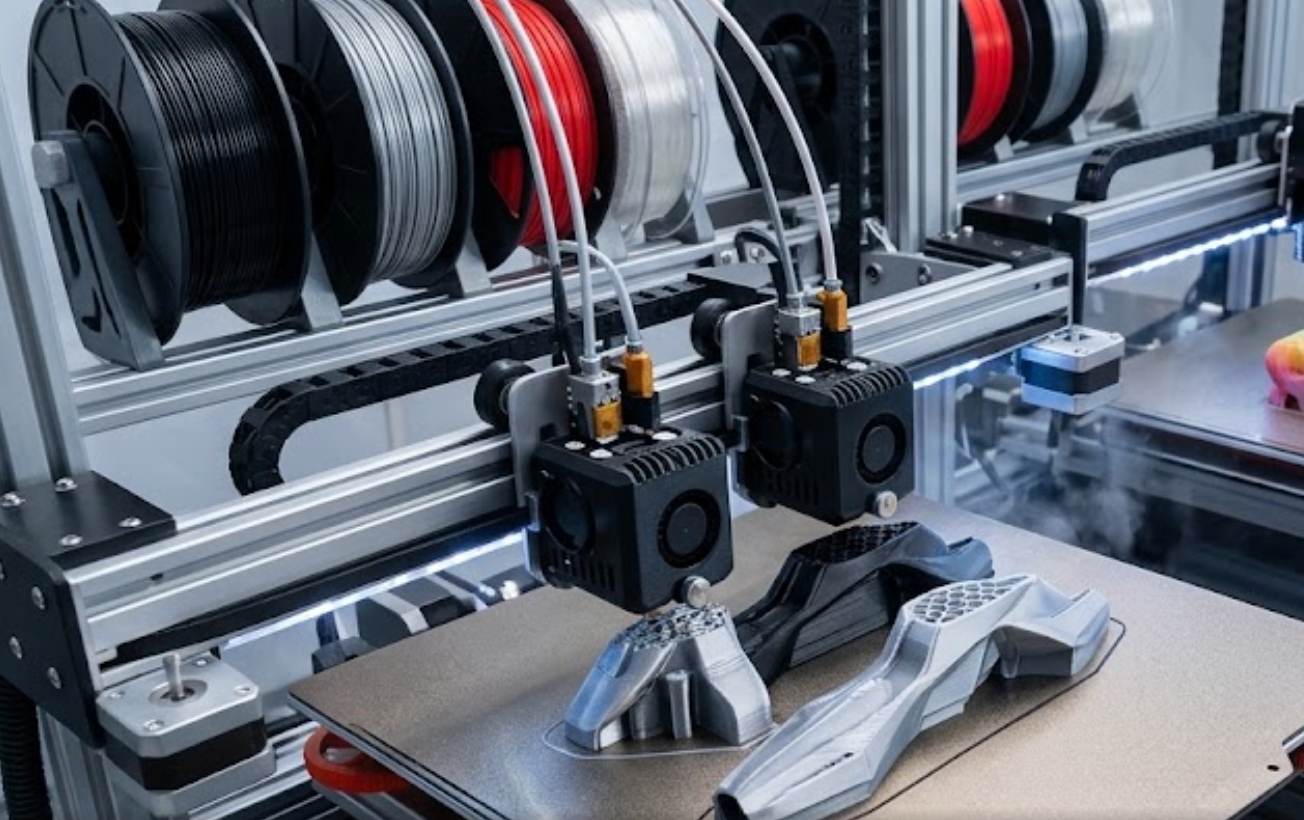
In high-tech manufacturing, the boundaries of what is technically achievable are shifting at an unprecedented pace. While conventional 3D printing (additive manufacturing) was previously restricted to processing a single material per build cycle, multi-material 3D printing ushers in a new era. This groundbreaking technology enables different metals, alloys, or advanced composites to be seamlessly combined within a single, uninterrupted printing process.
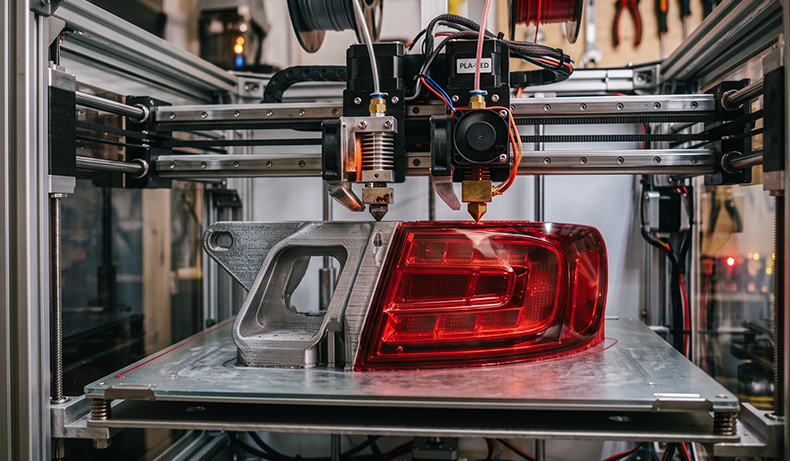 The process works by precisely switching between different material feeds—such as copper, titanium, or stainless steel powders—during layer-by-layer deposition. This creates a molecular or microscopic material transition (gradient materials) directly within the core of the component, eliminating the need for traditional joining techniques.
Customer advantages & technical insights
- Elimination of assembly and weak seams: Traditional welded joints and mechanical fasteners frequently act as structural weak points in complex assemblies. By printing the component as a single integrated unit, these critical failure and wear points are completely eliminated.
- Superior thermal conductivity: In complex parts—such as cooling channels for aerospace or semiconductor applications—highly conductive copper can be directly integrated with a mechanically robust titanium outer shell. This dramatically increases cooling efficiency without compromising structural integrity.
- Weight reduction and operational efficiency: Customers benefit from faster time-to-market, streamlined supply chains, and components that perform reliably under extreme operational conditions.
Multi-material additive manufacturing transforms design freedom from a theoretical concept into a tangible, commercial advantage.